
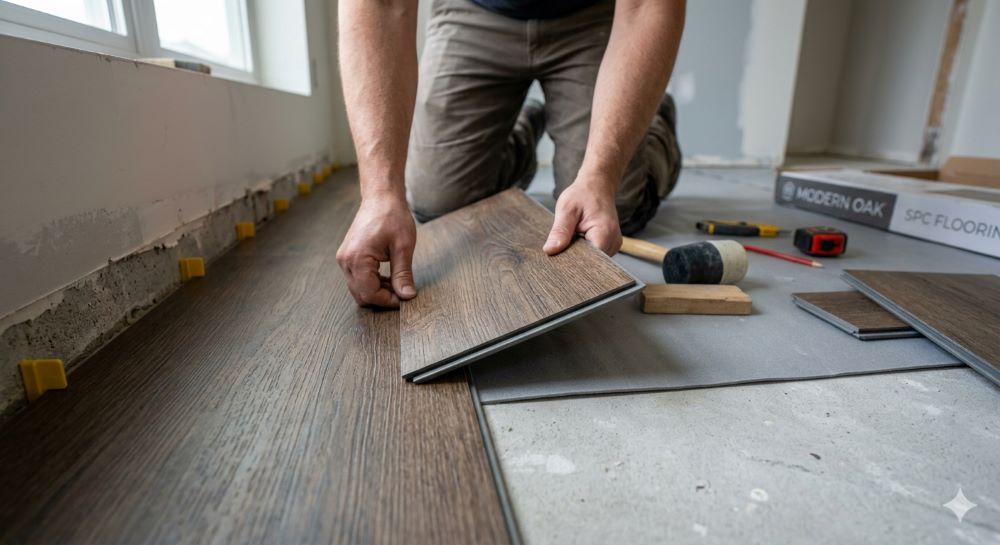
You might have heard it mentioned and thought, “What is SPC flooring?” Maybe in a store, from a contractor, or online.
Well, SPC flooring stands for Stone Plastic Composite flooring. It’s a type of rigid vinyl flooring with a dense, stone-based core. That core gives it strength, stability, and resistance to daily wear. Because of that, you may also hear SPC vinyl flooring or SPC core flooring, which are just different names for the same thing.
SPC officially came onto the market around 2014-2015. The idea behind its development was to provide a stronger, more stable version of traditional vinyl flooring.
Types of SPC Flooring
SPC flooring is available in several types. It’s mainly grouped by how it installs, its thickness, wear layer, surface design, backing, and plank format.
Each factor affects how the floor feels and how well it stands up to daily use. That said, the best SPC flooring choice depends on your space, lifestyle, and traffic level.
1. By Installation Method
The installation method is the basic way to group SPC flooring. It directly affects how easy your installation will be. Three types in this category:
Click-lock SPC flooring
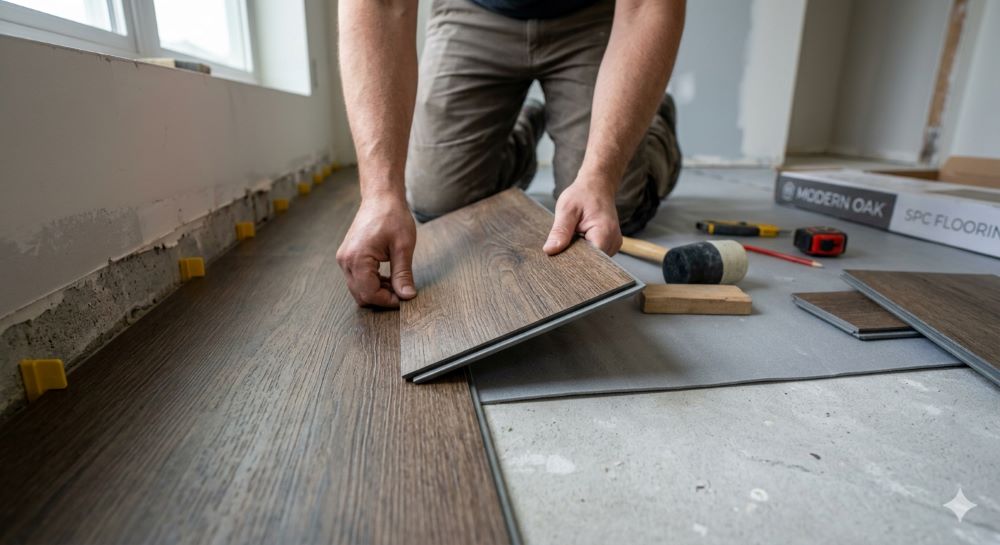
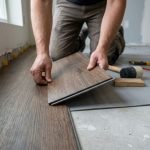
Click-lock is the most DIY-friendly option. The planks simply snap together and “float” over the subfloor. No glue is needed. It’s quick to install and replace if needed.
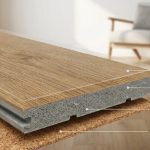
See a popular click-lock SPC flooring option with built-in underlayment
Glue-down SPC flooring
Each plank is glued to the subfloor. This requires more time and precision. It’s better suited for high-traffic areas where maximum stability is needed.
Loose lay SPC flooring
Loose lay SPC flooring doesn’t use glue or click systems. Instead, the planks are built with extra grip and weight to stay in place. Very fast to install, but there’s a trade-off— your subfloor must be perfectly flat. If not, the planks may shift over time.
2. By Thickness
This refers to the total thickness of the plank, including the core layer: –
-
- 3.2mm to 4mm – A budget type suited for low-traffic areas like bedrooms and apartments.
- 4mm to 5mm – Considered standard for most home applications.
- 5mm and 6mm – Mid-range and the “sweet spot” for high-traffic homes and commercial areas.
- 6mm to 8mm or more – Premium range, best for very high-traffic spaces like offices, shops, and hotels.
In general, thinner planks focus on cost and basic use, while thicker ones offer better comfort, stability, and sound reduction.
3. By Wear Layer (Protective Top Layer)
The wear layer is a clear protective coating applied over the design layer. It protects the floor from scratches, stains, and daily wear. It’s one of the most important performance features of SPC flooring.
It’s usually measured in millimeters (mm) or mil (one-thousandth of an inch). Common ranges include: –
-
- 0.2 mm (8 mil) – light residential use, low traffic areas
- 0.3 mm (12 mil) – standard residential use, most homes
- 0.5 mm (20 mil) – heavy residential or light commercial use
- 0.7 mm (28 mil and above) – commercial and high-traffic areas
Put simply, the thicker the wear layer, the better the floor resists scratches and everyday wear and tear.
4. Surface Design
This category is about how natural the floor looks and how it feels under your feet. The most common designs are: –
-
- Smooth finish – Clean look, easy to maintain, but with a less textured feel
- Embossed texture – Has a raised surface that mimics natural wood or stone
- Embossed in register (EIR) – Premium type of embossing. The texture lines match the printed wood grain, making it look more realistic
5. Backing (Underlayment Layer)
SPC flooring can also be grouped by what’s attached at the bottom. There are two main types: –
-
- With attached underlayment – Comes with a built-in backing, usually made of IXPE or EVA foam. The layer helps reduce noise, adds cushioning, and boosts comfort.
- Without underlayment – This version is usually installed with a separate underlay.
Check out a high-quality underlayment option for better sound and comfort
6. Plank Format
Plank format is about the shape of the flooring pieces. There are currently two main formats: –
-
- Planks – Long, narrow pieces that look like wooden floorboards. These are the most common choices in homes.
- Tiles – Square or rectangular pieces that often mimic stone, marble, or ceramic looks.
Note: Both formats use the same SPC core; the difference is only in appearance and design style.
SPC Flooring Pros and Cons
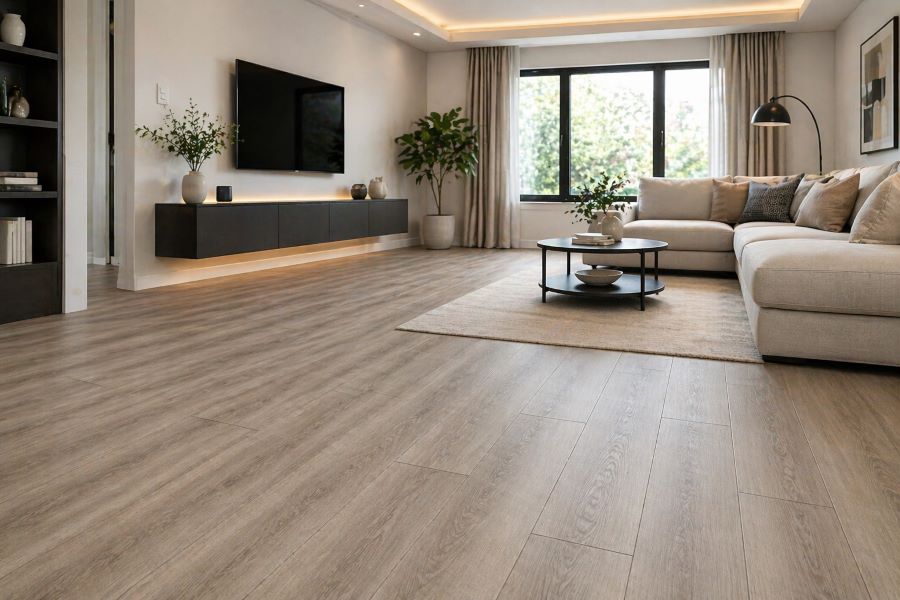
SPC flooring is popular for its strong mix of durability, style, and everyday practicality. However, there are also a few limits to consider.
SPC Flooring Advantages
1. Easy Installation
SPC flooring installation is straightforward, particularly with the click-lock systems. Even large areas can be completed fairly quickly.
See a reliable floor cutter that makes clean, precise cuts during installation
2. Waterproof Performance
Being impervious to water is one of its biggest strengths. Put differently, waterproof SPC flooring does not swell or get damaged when exposed to moisture. That’s why it’s a great choice for bathrooms, kitchens, and basements.
3. Low Maintenance
Another fantastic benefit of SPC flooring is that it doesn’t require special treatment. Regular sweeping and occasional mopping are all you need to keep it looking its best.
4. Long Lifespan
SPC can serve you for 15 to 25 years, of course, depending on quality and usage. The strong core and wear layer help it withstand daily wear.
SPC Flooring Disadvantages
1. Surface Damage Cannot Be Repaired Easily
If the top wear layer gets deeply scratched or damaged, it cannot be sanded or refinished like real wood. In most cases, the affected plank must be replaced.
2. Subfloor Requirements
SPC flooring requires a smooth, level subfloor. Any uneven surface can affect installation quality and may lead to shifting or noise over time.
SPC Flooring Manufacturers in the USA
There are many SPC flooring manufacturers in the US. Some of the best SPC flooring brands include Shaw Floors, COREtec, Mannington, and Tarkett.
Another growing name is McMillan SPC flooring. It is a North American brand that focuses on waterproof vinyl collections and rigid core technology. McMillan is known for combining modern designs with solid everyday performance.
SPC Flooring Price
The price varies based on type and brand. SPC is usually sold per square meter or square foot.
On average, the basic SPC flooring cost is around $1.50 to $3.00 per sq ft for materials. Mid-range options sit around $3.00 to $5.00 per sq ft. Premium SPC flooring can cost $6.00 to $9.00 per sq ft or more.
Installation also adds to the total cost. In many cases, labor ranges from about $2.50 to $6.50 per sq ft. So in total, a fully installed SPC floor can range from about $4.50 to $10+ per sq ft.
SPC Flooring vs Alternatives
In this section, we see how SPC stacks up against other popular options on the market. These include LVP, laminate, WPC, and hardwood. We focus on a few key factors, namely, ease of installation, longevity, water resistance, and maintenance.
SPC Flooring vs LVP
SPC flooring and LVP are closely related, with the main difference being the core. The former has a rigid stone-based core, while latter has a softer, flexible vinyl core. This makes SPC more stable and harder underfoot.
-
- Pricing: LVP is usually cheaper than SPC flooring. However, SPC is more durable and long-lasting, which can help keep costs down down the road.
- Water resistance: Both SPC and LVP are considered 100% waterproof. Nonetheless, thanks to its rigid limestone core, SPC resists warping, buckling, or gapping better than LVP. That’s why it’s a superior choice for high-moisture spaces like bathrooms or kitchens.
- Ease of installation: Both are easy to install, but LVP is slightly more flexible. That makes it easier to deal with on uneven floors.
- Maintenance: Both SPC and LVP are low maintenance. Regular sweeping and light mopping are enough to keep them clean.
In simple terms, SPC flooring is stronger and more stable, while LVP is softer and slightly more budget-friendly.
SPC Flooring vs Laminate
SPC flooring and laminate are often compared because they look similar on the surface. Even so, they are built very differently. Laminate uses a high-density fiberboard (HDF) core made from wood fibers, making it more moisture-sensitive.
-
- Pricing: Laminate is usually cheaper and a budget-friendly option for many homes.
- Longevity: SPC flooring can last up to 15-25+ years, while laminate typically lasts around 10–20 years under normal home conditions.
- Water resistance: While laminate is water-resistant, prolonged exposure to moisture can cause damage.
- Ease of installation: Both laminate and SPC, especially click-lock systems, are easy to install. Both require a reasonably flat subfloor for best results.
- Maintenance: Both options are easy to maintain.
WPC vs SPC Flooring
WPC flooring (Wood-Plastic Composite) is a type of engineered vinyl plank (EVP) or waterproof luxury vinyl. This material feels softer and more cushioned underfoot than SPC.
-
- Pricing: WPC costs more than SPC flooring. The added comfort layer and structure increase the price.
- Longevity: Both WPC and SPC flooring are long-lasting, even under heavy use.
- Ease of installation: Easy to install; both use click-lock systems. They can also be installed as floating floors.
- Maintenance: Both options are low maintenance. Regular sweeping and light mopping are all that’s needed.
Related: What Is WPC Flooring—and Why Is It So Popular in 2026?
SPC Flooring vs Hardwood
SPC flooring and hardwood sit at two very different ends of the flooring world. One is modern and engineered for performance, while the other is timeless and natural, built for warmth and organic elegance.
-
- Pricing: Hardwood is more expensive than SPC.
- Longevity: Hardwood can last 50 years or more with proper care. You can also sand and refinish it several times. In contrast, SPC flooring lasts 15–25 years and doesn’t require refinishing.
- Water resistance: Hardwood is sensitive to moisture. Prolonged water exposure can cause damage.
- Ease of installation: Hardwood flooring is more complex. It often needs nailing or gluing, which takes longer.
- Maintenance: Hardwood needs more care; controlled cleaning and occasional refinishing to maintain its look.
- Overall feel: Hardwood feels warm, natural, and premium underfoot. It has a solid, organic feel that improves with age. SPC flooring feels harder and more rigid.
Related: How Long Does a Hardwood Floor Last?
At a Glance – SPC Flooring vs Alternatives
| Factor | SPC Flooring | Laminate | WPC Flooring | Hardwood |
| Pricing | $1.5-$9/sq ft (material), $4.5-$10+/sq ft installed | #1-$5/sq ft (material), $4-$13/sq ft installed | $3-$8/sq ft (material) | $6-$15+/sq ft installed |
| Longevity | 15-25 years | 10-20 years | 15-25 years | 50+ years (refinishable) |
| Water Resistance | Fully waterproof | Water-resistant | Fully waterproof | Not water-resistant |
| Ease of Installation | Easy click-lock | Easy click-lock | Easy click-lock | Complex (nail/glue) |
| Maintenance | Low maintenance | Low maintenance | Low maintenance | Higher maintenance, refinishing needed |
| Comfort (Underfoot) | Firm and stable | Slightly softer feel | Soft and cushioned | Warm and natural feel |
Conclusion – Find the Best SPC Flooring for Your Home
SPC flooring offers a perfect balance of beauty and value for money. It fits well in homes thanks to its 100% waterproof nature, extreme rigidity, and scratch resistance.
Now that you know how it compares with popular alternatives, the next step is simple. Whether you’re planning a renovation or a new build, focus on what your space actually needs. High-traffic areas like the living room and kitchen need thicker planks and a stronger wear layer for better durability and stability.
Take a look at a few SPC flooring options and compare thickness, wear layer, and design
Don’t just chase price. Choose an option that gives you real value and makes your space feel the way it should—like home.
Leave a Reply