
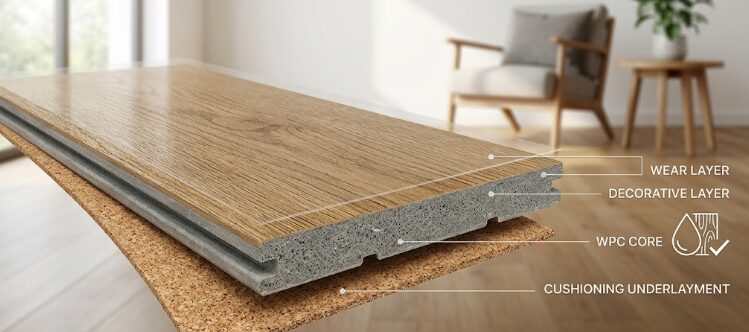
“What is WPC flooring?” is a question many people are asking lately—and for good reason. WPC flooring is a type of engineered vinyl flooring made from wood plastic composite (WPC). Put simply, it combines wood fibers with plastic polymers, creating a tough, waterproof core. It stands up well to moisture, spills, and daily wear.
You’ll often hear it called WPC vinyl flooring, and that’s because it falls into the luxury vinyl category. It also feels softer underfoot than traditional tile or hardwood. So, it gives you comfort, easy maintenance, and durability in one package.
In other words, WPC flooring is designed for real life.
Types of WPC Flooring
WPC flooring is grouped in three main ways. First, by where it is used, second, by how it is built, and third, by surface design and finish.
Where It’s Used (Application)
Indoor WPC flooring is made for interior spaces. Think living rooms, bedrooms, kitchens, and basements. It focuses on comfort, style, and easy daily use. So, it fits well in most residential settings.
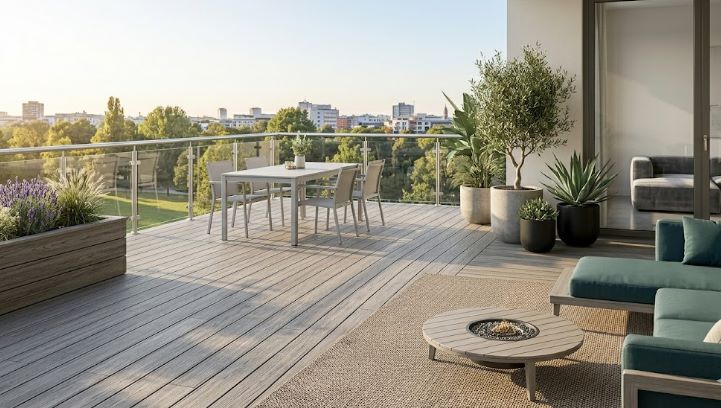
For exterior spaces, standard indoor planks won’t work. You’ll often find outdoor WPC decking. While it uses a similar wood-plastic blend, it comes as thick, heavy-duty boards designed to withstand harsh weather. This type works exceptionally well for patios, balconies, and walkways because it’s highly resistant to rot, termites, and moisture.
How It’s Built (Structure)
Under this category, there are two common types: solid-core and hollow-core.
Solid-core WPC flooring is dense and strong. It’s more stable underfoot and, therefore, ideal for high-traffic areas.
By contrast, hollow-core WPC flooring is lighter and less dense. It’s a budget-friendly option suitable for low-traffic living spaces, such as bedrooms and guest rooms.
Surface Design and Finish
Beyond the core, WPC flooring also differs in surface treatment and finish. Some options come with an embossed (textured) surface, which mimics real wood grain and adds extra grip. Others have a smooth finish, which feels cleaner and more modern in appearance.
👉Browse WPC flooring options on Amazon
WPC Flooring Pros and Cons
WPC flooring has its strengths and its limits. But honestly, it leans more on the strong side. Compared to many traditional floors, it just feels more practical for everyday living. That’s probably why, based on recent forecasts, global demand is rising steadily, at around 6–7% annually.
Advantages of Wood Plastic Composite Flooring
Waterproof Performance
One of the greatest WPC flooring benefits is its ability to handle water really well. Its core is built to block moisture from seeping in. That makes it a safe choice for kitchens, bathrooms, and busy family spaces.
Underfoot Comfort
This WPC flooring advantage also stands out immediately. The material feels softer and warmer compared to tile or stone. The cushioned core reduces strain when walking or standing for long periods.
Strong Durability for Daily Use
WPC is built for real-life use, not just looks. Scratches, stains, and general wear are less of a worry when the wear layer is of good quality.
Note: The wear layer is the top shield sitting above the design layer. WPC flooring comes with a wear layer between 12 mil and 20 mil, which is the industry standard for homes. Entry-level options may sit around 6-8 mil, but are not recommended for busy homes. Mid-range and premium floors mostly use 20 mil, which is a “safe standard” for modern residential use. It offers strong protection for kitchens, living rooms, and homes with kids or pets. Anything above 20 mil is usually considered commercial-grade.
Reliable Lifespan
The WPC flooring lifespan is around 10 to 25 years, according to recent industry estimates and manufacturer data. Of course, the exact life depends on the wear layer, usage, and installation quality. In a typical home with proper care, 15-20 years is a realistic expectation for mid- to high-quality options.
Stable in Changing Conditions
Another great benefit of WPC flooring is that temperature and humidity changes don’t affect it as much as traditional wood. It stays more stable over time, which helps reduce warping or gaps.
WPC Looks Like Real Wood
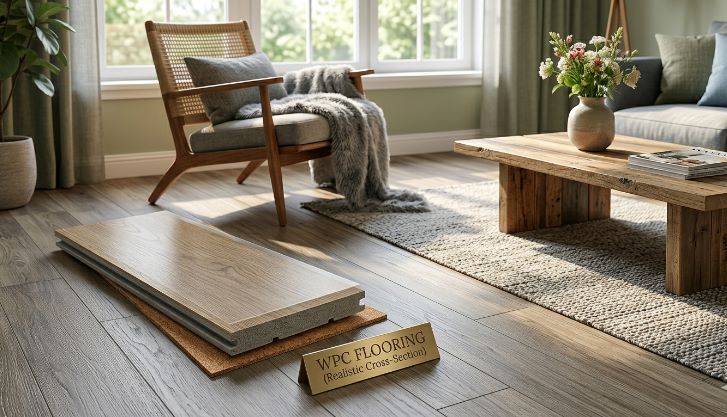
WPC flooring looks very close to real wood, at least at first glance. It uses high-definition printed layers and textured embossing to copy natural grain and patterns. You get the wood look without the heavy maintenance.
Disadvantages of Wood Plastic Composite Flooring
High Upfront Cost
This is perhaps one of the greatest WPC flooring disadvantages. While it’s a cost-effective solution over the long term, thanks to low maintenance and a 15–20 year lifespan, the initial price can still be a concern for budget-focused projects.
Varying Quality Across Brands
Lower-quality products may have thinner wear layers and weaker cores. That affects durability and lifespan.
Limited repair options
If a plank gets damaged, you most likely have to replace it. Unlike hardwood, it cannot be sanded and refinished.
Installing WPC Flooring
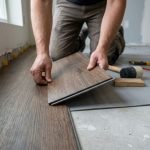
WPC flooring installation is generally simple and flexible. Most WPC floors use a click-lock system.
There are mainly two ways to install WPC:
-
- Floating – Planks lock together and sit above the subfloor without adhesive. This is the most common option and works in most homes.
-
- Glue-down – Planks are fixed directly to the subfloor using adhesive. This method offers extra stability and is often used in high-traffic or commercial spaces.
So, can you install it yourself? Yes, in many cases you can, especially with floating floors. However, if the subfloor is uneven or the space is large, professional help may be the better choice.
👉Check the price of DIY WPC flooring installation kits
WPC Flooring versus Alternatives
WPC flooring is undoubtedly practical, and, unsurprisingly, many modern homes are choosing it. But the truth is, its rivals—SPC, LVP, tiles, laminate, hardwood, and engineered wood—also have plenty to offer. So, let’s take a look at the core differences and see why WPC might just win your heart.
SPC vs WPC Flooring
The contrast starts with what’s inside. SPC (Stone Plastic Composite) has a rigid, mineral-heavy core, making it feel slightly harder underfoot.
Water isn’t a problem for either type. Just make sure the planks are properly locked and sealed at the edges. SPC is much more stable than WPC, which makes it a safe choice for large, sunny rooms. WPC, while durable, may expand or contract a bit more in extreme temperatures.
Installation is straightforward for both. However, WPC can sometimes be a bit more forgiving over uneven subfloors.
In terms of looks, both are available in assorted styles. Your choice often boils down to the feel you want underfoot and the amount of traffic the spaces see. Of course, WPC is costlier—probably because of that softer, more cushioned feel.
Related: What Is SPC Flooring & Why Is Everyone Talking About It?
WPC Flooring vs Concrete
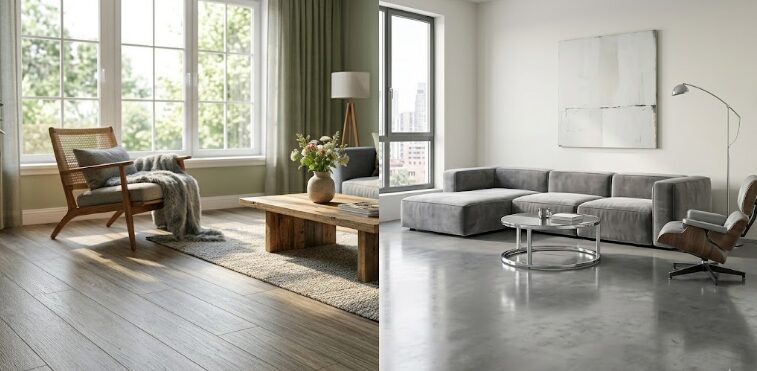
Concrete is tough, easy to maintain, but needless to say, it’s not that comfortable underfoot. It can get cold in winter and retain heat in summer.
On installation, concrete requires keen leveling and sometimes sealing before anything goes on top. You can install WPC on most flat subfloors, making it a quicker option.
Concrete is water-resistant, but it can trap humidity if not sealed. But when it comes to looks, it offers that sleek, industrial vibe. Cost-wise, a basic concrete slab is cheaper, but adding decorative finishes can quickly make it a pricier project compared to WPC.
WPC Flooring vs Tiles
Tiles are everywhere for a reason—they’re easy to clean and built to last. But like concrete, they can feel hard and cold, particularly in winter.
Installing tiles takes effort. Flat floors, sticky grout—things can get really messy. Tiles are also prone to cracking, especially if something heavy falls on them.
Design-wise, tiles come in all sorts of colors and patterns—white, beige, gray, wood-look, marble-look, etc. WPC mostly sticks to wood designs.
Cost varies a lot depending on type and quality. Top-tier porcelain or natural stone can get pricey. But whether you choose low-cost or premium tiles, WPC is generally more expensive.
WPC Flooring vs Laminate
Laminate flooring has a completely different build inside. Its core is made of high-density wood fiberboard. This wood-based core makes it highly vulnerable to moisture. If water sits on the surface, the edges can swell, warp, and ruin the look. Because of this, laminate is not a safe choice for bathrooms, kitchens, or damp basements.
However, laminate takes the crown when it comes to scratch resistance. The top wear layer is very hard and stands up really well to pet claws and heavy traffic.
Regarding the look, laminate also wins the prize for realistic beauty. The fiberboard core allows for deep, authentic embossing that feels like genuine hardwood planks. Installation is similar to WPC since both options use a simple click-lock system.
Cost is where laminate really gains an advantage. It is generally much more budget-friendly upfront, making it a very attractive option for dry living spaces.
WPC Flooring vs LVP
Traditional LVP (Luxury Vinyl Plank) is a close relative to WPC. It only lacks a rigid core. Instead, it is made of several flexible layers of polyvinyl chloride (PVC) plastic melted together.
Water resistance is where LVP matches WPC—it’s all the way, making it excellent for high-moisture rooms. Cost is one of the reasons homeowners choose LVP. It’s significantly cheaper upfront than premium WPC flooring options.
It’s also much thinner than WPC. This thin profile makes it highly sensitive to the floor underneath. If your subfloor has minor bumps, dips, or imperfections, they will telegraph right through to the surface.
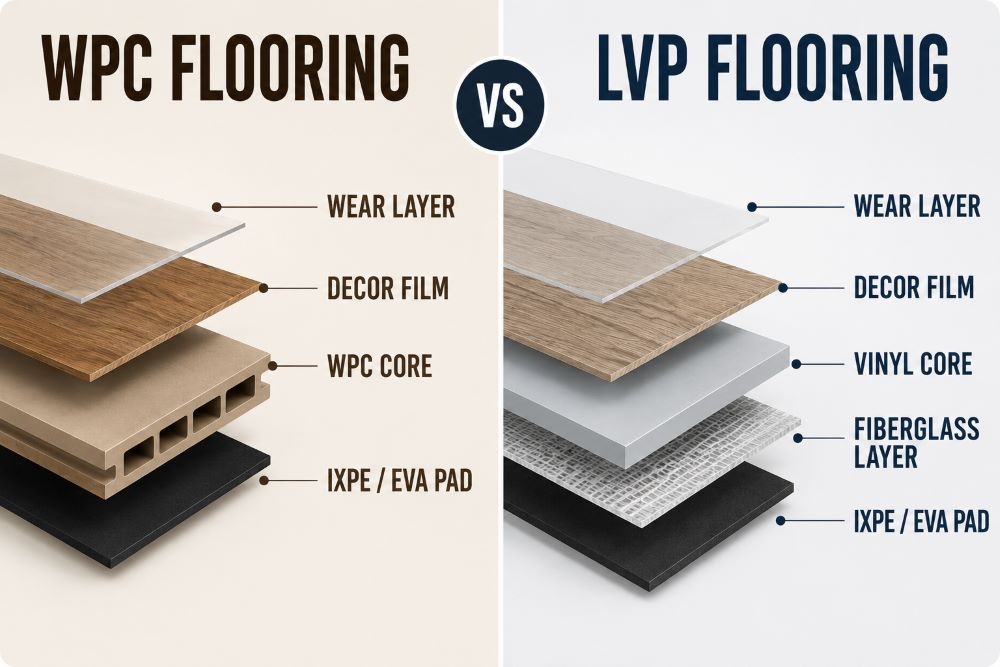
What’s more, LVP falls short when it comes to underfoot comfort. It’s much harder and colder because it lacks the foamed, air-infused core that gives WPC its soft, cushioned feel. On installation, many standard LVP options require a full glue-down application. This can be messy and take more time than a click-lock setup.
WPC Flooring vs Engineered Wood
Engineered wood stands apart thanks to a top layer of genuine solid hardwood. Beneath that sits a core of cross-laminated plywood layers.
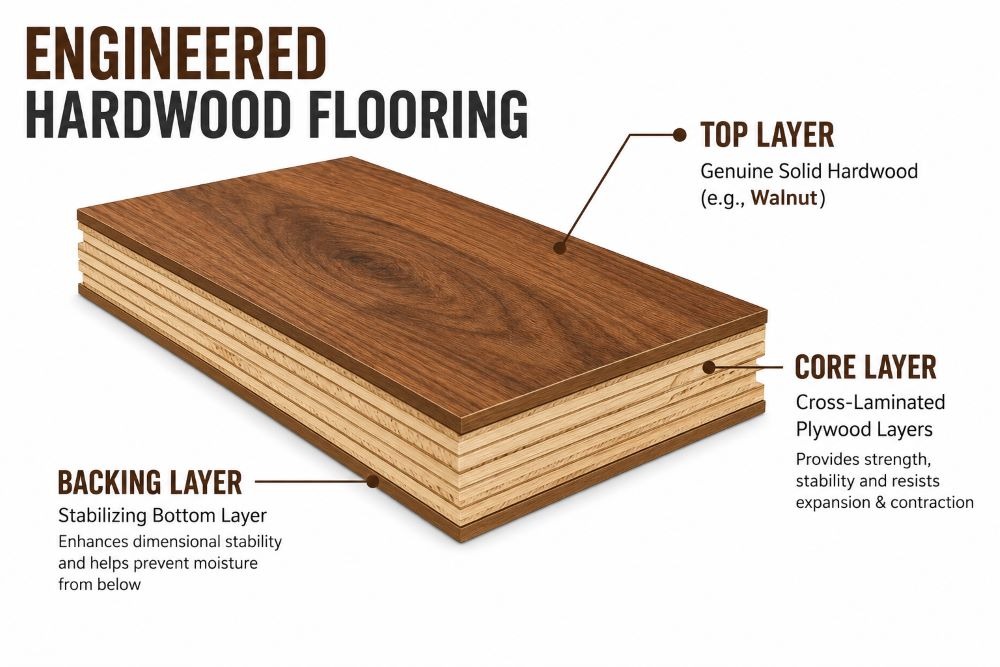
This material holds a great advantage in terms of visual prestige and home resale value. Because the top surface is actual hardwood, it offers unmatched natural grain beauty that WPC prints can only mimic.
However, this real wood composition has its downside. Engineered wood can’t match the waterproof nature of WPC flooring. Excessive moisture can stain or permanently ruin the wooden top layer. That makes it not an ideal choice for high-humidity areas like bathrooms or kitchens.
Installation is flexible but generally more demanding. Many styles require professional stapling, nailing, or gluing directly to the subfloor. On maintenance, this flooring requires careful attention and specialized wood cleaners. Unlike synthetic WPC planks, it can sometimes be sanded and refinished once or twice if scratches accumulate over time.
Cost is where the differences peak significantly. Engineered wood is a premium product, making it much pricier—to purchase and install—than WPC flooring.
WPC Flooring vs Hardwood
Hardwood is the ultimate inspiration behind both engineered wood and synthetic planks. It’s a single, solid piece of timber from top to bottom.
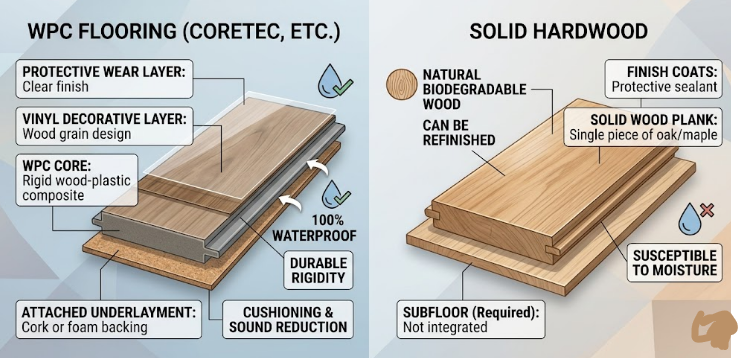
Being 100% natural, hardwood shares the same moisture weaknesses as engineered wood. It doesn’t handle standing water or heavy humidity without cupping or warping.
However, hardwood holds the supreme crown for lifespan. Unlike WPC, you can sand and refinish solid hardwood multiple times over many decades. It can easily last for generations in a dry home.
Ultimately, hardwood is a lifelong investment for pure luxury. However, WPC gives you a similar look with zero maintenance anxiety.
WPC Flooring Manufacturers
When you start shopping, you will quickly notice a wide variety of WPC flooring brands competing for your attention.
The undisputed pioneer in this industry is USFloors, the creator of Coretec WPC flooring. They invented the rigid core vinyl category and have remained one of the most trusted names on the market.
Beyond the major innovators, there are dozens of global WPC flooring suppliers manufacturing high-quality planks. These companies distribute their products worldwide through authorized dealer networks and local showrooms.
Finding the right place to buy is straightforward. Major home improvement stores and specialty tile shops act as the primary WPC flooring sellers in most regions. Fortunately, you do not have to rely solely on brick-and-mortar stores. Some of these brands also have products available online. So, you can quickly compare pricing and reviews before making a decision.
👉Browse WPC flooring from top brands on Amazon
WPC Flooring Price
Budgeting for your project requires you to be a bit flexible. Prices can vary daily depending on availability and brand.
On average, expect anywhere from $3 to $7 per square foot for the materials alone. Entry-level options with thinner wear layers sit at the lower end of that scale. Premium brands with thick 20-mil wear layers and attached underlayment may cost more.
Installation labor adds another $2 to $5 per square foot to the total cost. If your subfloor needs extensive leveling or repair work first, that will also push the final bill higher. Because the market shifts constantly, checking online is the easiest way to plan your budget accurately.
👉Check current WPC flooring prices on Amazon
Conclusion
Choosing a floor is a major decision. It ultimately comes down to your household’s daily lifestyle and comfort needs. If you prioritize underfoot warmth and waterproof protection, WPC is a phenomenal investment for your home. It gives you the high-end look of genuine wood without any of the constant upkeep or moisture worries.
Take your time to compare top brands and read verified reviews. You can even order a few samples to see the textures yourself.
Best of luck with your flooring project, and enjoy creating a beautiful, stress-free space!

Leave a Reply