
Dogs bring joy, but they sometimes cause damage. Here’s what we do to protect our hardwood floors from dogs‘ scratches and accidents:
1️⃣Add rugs and waterproof mats in high-traffic areas
2️⃣Trim nails regularly
3️⃣Use paw protectors like non-slip socks, rubber boots, or wax
4️⃣Clean accidents immediately
5️⃣Clean the floors regularly
6️⃣Use scratch-resistant finishes for long-lasting protection
Keeping your wood floors completely scratch-free is challenging for most people. However, combining these methods and practices really does prevent serious damage in the long run.
Related: How to Mop Hardwood Floors Without Damage
How Bad Can Dog Damage Get?
Based on our experience, the damage can range from minor scratches and dents to deep gouges, dark urine stains, and warping from moisture. Different hardwood floors react differently to the dog activity.
For instance, softer woods like cherry or pine scratch easily, even from a calm walking dog. Red oak or maple holds up better, though playful pups can still leave marks. Harder species, such as Brazilian walnut or hickory, are much more resistant and show only minor scratches over time.
This table presents common hardwoods and how they hold up under dog behavior, using the Janka hardness scale.
| Wood Species | Janka Hardness | Damage Risk With Dogs | Notes |
| Pine | 690 | Very High | Soft, scratches and dents easily |
| Cherry | 950 | High | Scratches easily, darkens with age |
| Red Oak | 1290 | Medium | Durable, shows scratches moderately |
| Maple | 1450 | Medium | Smooth, scratches may be visible |
| Hickory | 1820 | Low | Very durable, minor scratches |
| Brazilian Walnut | 3680 | Very Low | Extremely hard, excellent resistance |
The finish type on your hardwood floor also determines how much damage dogs can cause. Finishes protect against scratches, dents, and moisture. They also make cleaning much easier. Therefore, choosing the right finish is as important as picking the right wood.
Here’s a look at common finishes and how well they stand up to the furry friends.
| Finish Type | Scratch Resistance | Moisture Resistance | Dog Friendliness | Notes |
| Aluminum Oxide (factory finish) | Excellent | Very Good | Best | Extremely durable, lasts 10-25 years |
| Oil-Based Polyurethane | Very Good | Good | Great | Traditional finish, slightly amber, recoats well |
| Water-Based Polyurethane | Good | Medium | Moderate | Clear finish, dries fast, less odor, recoats faster |
| Wax | Poor | Low | Avoid | Soft, scratches easily, needs frequent maintenance |
| Hardwax Oil | Good | Medium | Moderate | Natural look, penetrates wood, requires regular reapplication |
How to Protect Hardwood Floors From Dogs – Daily Habits That Work
You don’t have to choose between your furry friend and beautiful hardwood floors. You can keep the floors looking great while still enjoying all the zoomies, cuddles, and tail wags. Some of these tips may seem small, but they make a big difference over time.
1. Add Rugs and Waterproof Mats in High-Traffic Areas
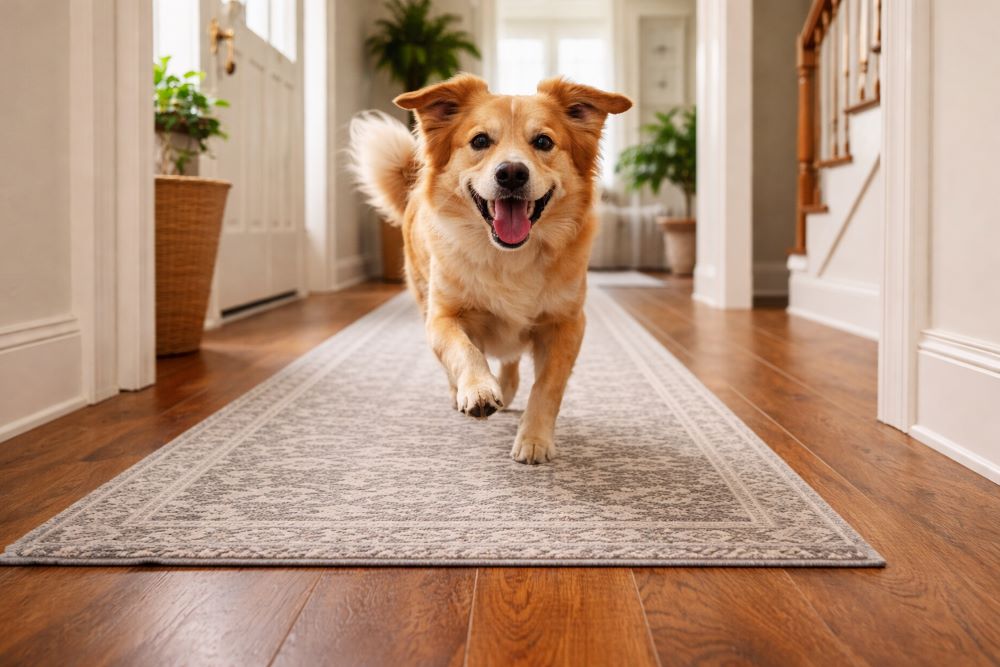
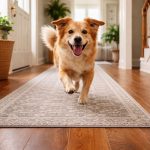
Dogs tend to run and jump in hallways, entryways, or near doors. Placing non-slip rugs or waterproof mats in these spots cushions impact and reduces scratches. Runners on stairs and around feeding stations protect your floors from concentrated wear.
2. Clean Accidents Immediately
Urine, vomit, or water bowls left on hardwood can stain, warp, or smell permanently. Blot spills right away and use a pH-neutral wood cleaner. Acting quickly prevents liquid from penetrating seams or breaking down the finish.
Related: The Best Floor Cleaner for Wood
3. Clean Floors Regularly
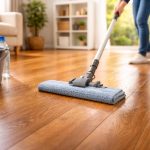
Dirt, sand, and pet hair act like sandpaper on wood. Sweep, vacuum, or dry-mop floors frequently. This keeps scratches to a minimum.
Related: Best Vacuum For Hardwood and Tile Floors You’ll Love
4. Consider Using Paw Protectors
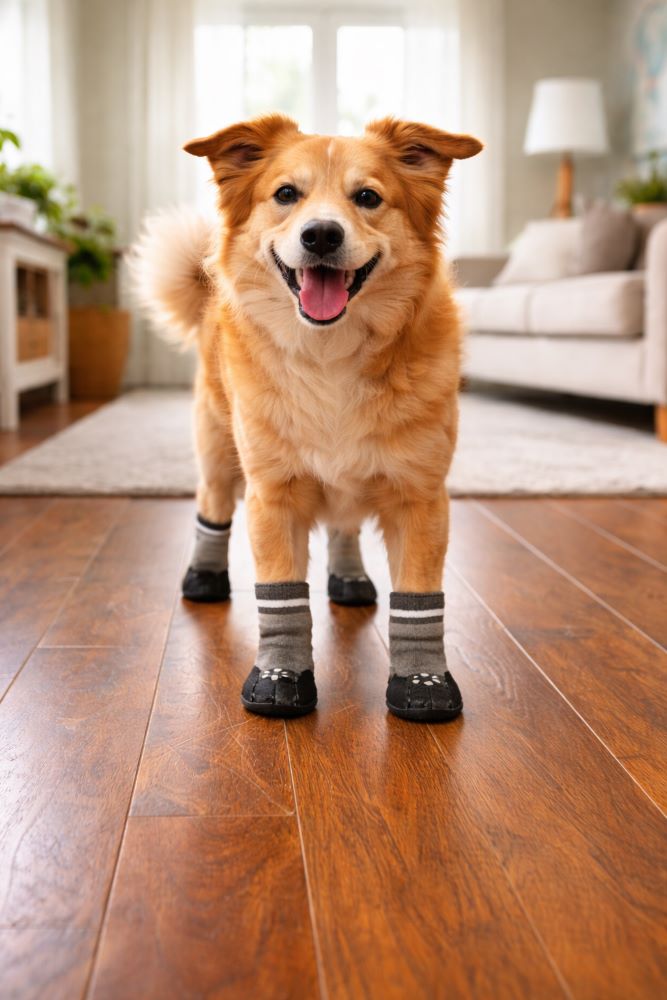
When your dog slips, its claws dig into the floor. Non-slip socks, rubber boots, or paw wax create a barrier that reduces traction damage. We’ve found paw wax works especially well for short indoor walks or playful zoomies, while boots or socks help for active, larger dogs.
5. Trim Nails Regularly
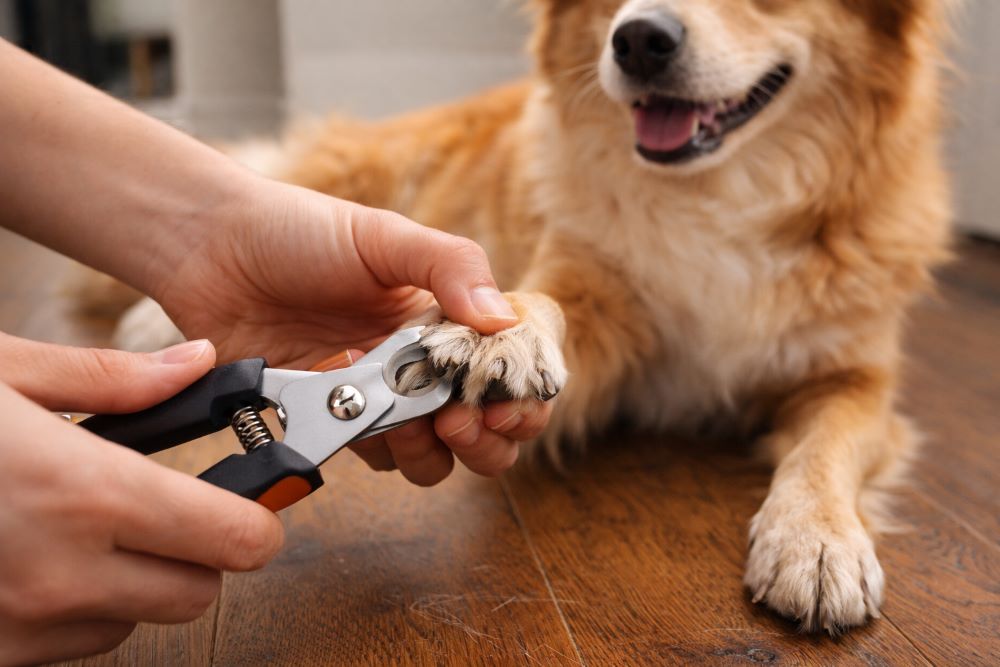
Long nails dig into wood with every step. The simple click test works: if you hear nails clicking on the floor, it’s time to trim. Aim for every 2–4 weeks, and consider using a grinder to smooth sharp edges. Regular nail care is hands-down the most effective way to prevent scratches.
6. Use Scratch-Resistant Finishes for Long-Lasting Protection
A durable finish is your final line of defense against scratches, accidents, and everyday wear. Even the hardest wood benefits from a strong coating. We recommend finishes like aluminum oxide or oil-based polyurethane for long-lasting protection.
Related: How to Refinish Hardwood Floors: Step-by-Step Guide
Bonus Tips to Keep Hardwood Floors Safe
☑Consistent Training Goes a Long Way
The best way to prevent accidents is consistent potty training. Make sure your dog has a set bathroom schedule and is supervised when not outside. Reward and praise them when they go in the right spot—it works wonders.
☑Consider Pee Pads for Puppies or Senior Dogs
For puppies, older dogs, or pets with bladder issues, pee pads can absorb accidents and protect your floor. Change them as needed and dispose of them responsibly.
☑Choose Toys Carefully
Hard or heavy chew toys can dent hardwood if dropped repeatedly. Stick to soft toys, and set up a designated play area to keep floors safe while pups have fun.
☑Choose Dog-Friendly Flooring
If you’re planning a renovation or upgrade, consider scratch-resistant and waterproof flooring like laminate, tile, or vinyl. These surfaces are more durable and easier to clean than traditional hardwood.
How to Fix Dog Scratches on Hardwood Floors
If your floors already have marks, don’t worry — many scratches can easily be repaired without replacing the boards. The best repair method depends on the severity of the scratches.
How to Repair Minor, Surface Scratches
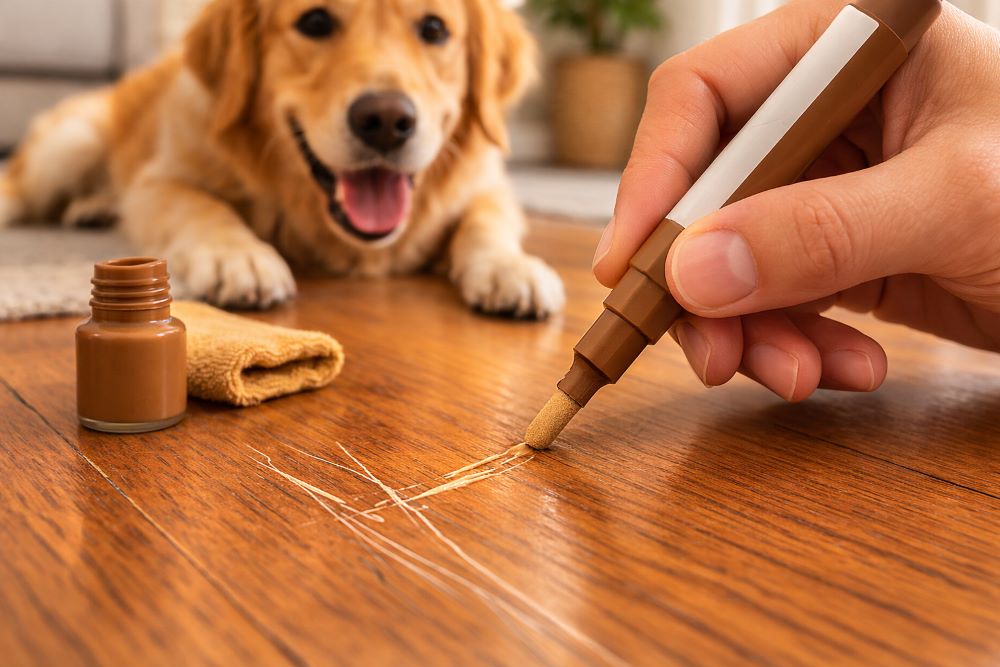
Light surface scratches that only affect the finish can often be repaired quickly:
Step 1️⃣. Clean the affected area
Step 2️⃣. Apply a hardwood floor polish, scratch repair marker, or a small amount of wood finish that matches your floor color.
Step 3️⃣. Gently buff the area with a soft cloth to blend it in.
How to Repair Medium Scratches
Scratches that penetrate the finish and lightly mark the wood may need a bit more work. Use a wood stain marker or blending pencil that closely matches your floor:
Step 1️⃣. Apply the marker or blending pencil to the scratch and wipe away any excess.
Step 2️⃣. After it dries, seal the area with a small amount of polyurethane or floor finish for protection.
How to Repair Deep Scratches
If the scratch is deep enough to create a groove in the wood, you’ll likely need wood filler.
Step 1️⃣. Fill the scratch with a color-matched wood filler.
Step 2️⃣. Allow it to dry, then lightly sand the area until smooth.
Step 3️⃣. Finish by applying stain and a protective coat to restore the floor’s appearance.
Related: How to Remove Scuff Marks from Wood Floors – Step-by-Step
Keep Your Floors Looking Great!
Dogs and hardwood floors can absolutely coexist. You just need a few simple habits discussed, viz:
✔Trim your dog’s nails often
✔Add rugs in busy areas
✔Clean spills right away
✔Keep the floors clean to remove dirt and grit that can accelerate scratch formation.
✔Use paw protectors like non-slip socks, rubber boots, or wax
✔Use scratch-resistant finishes for long-lasting protection
Think of it as regular home care, just like cleaning or vacuuming. A little effort now keeps your floors looking good for years.
Related: How Long Do Hardwood Floors Last? Why You’re Probably Wrong
Leave a Reply