
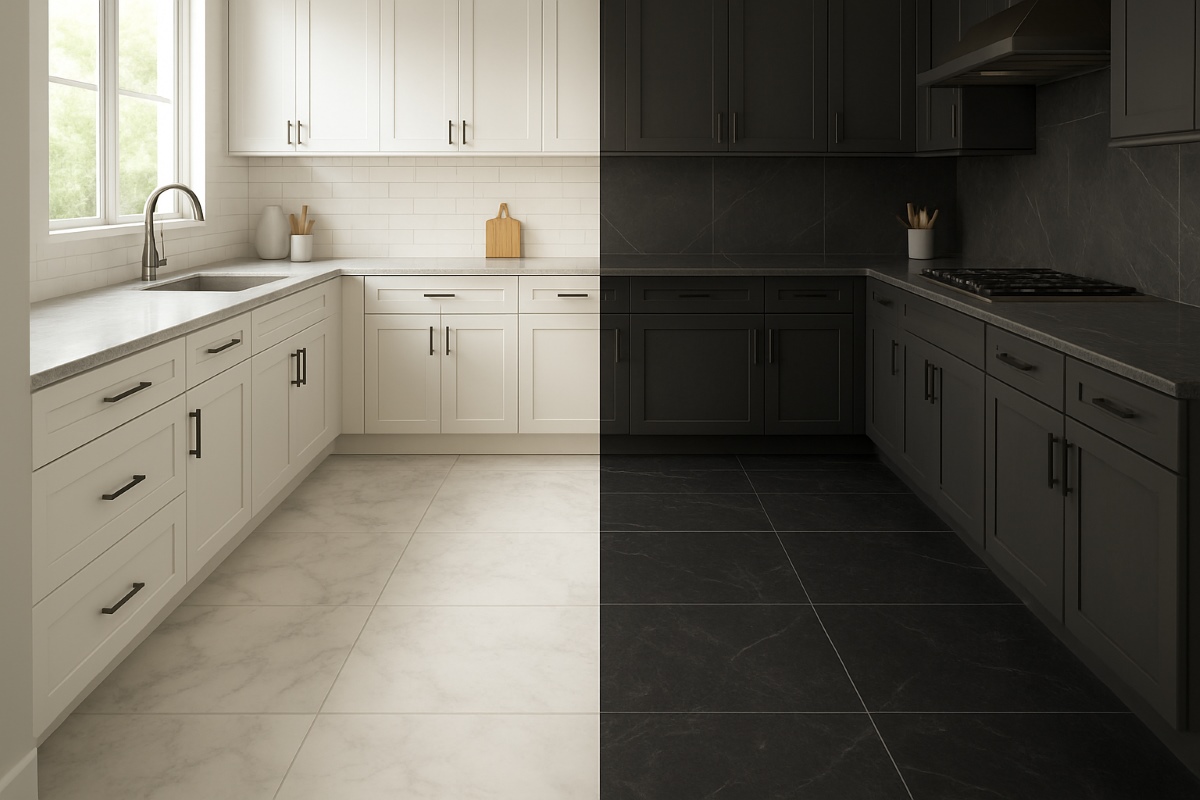
Installing marble floors in kitchen spaces can feel tricky. 😅 One wrong choice and your beautiful kitchen might look smaller, darker, or more challenging to maintain than you hoped.
Imagine this: you’ve just picked your dream cabinets, fresh paint on the walls, and sunlight streaming through the windows. Now, the floor is the stage that ties it all together. Should it be light and airy, or dark and dramatic? The perfect marble choice can make your kitchen feel spacious and inviting—or cramped and heavy.
And that’s where this post comes in. We’ve dug deep into industry research, designer tips, and real-life kitchen scenarios to give you an expert-backed guide. By the end, you’ll know which marble works best for your space, lighting, and lifestyle.
What to Know Before Choosing Marble Floors in the Kitchen
Before you choose your marble, there are a few key things to consider. These details can make a big difference in how your kitchen feels and functions.
✔Natural Veining
Marble isn’t uniform. Each slab has its own pattern, from subtle swirls to bold streaks. Light veins can make a space feel airy, while darker veins add drama and depth. Think about the mood you want to create.
✔Finish
Marble comes polished or honed. Polished floors shine and reflect light beautifully, but they can show scratches and spills more easily. Honed finishes are matte and forgiving, especially in busy kitchens.
✔Your Kitchen Traffic
How much your kitchen gets used matters. High-traffic areas can wear down marble over time. Choosing the right finish and shade can help keep your floors looking fresh.
Light/White Marble Kitchen Floors — Bright, Airy, and Timeless
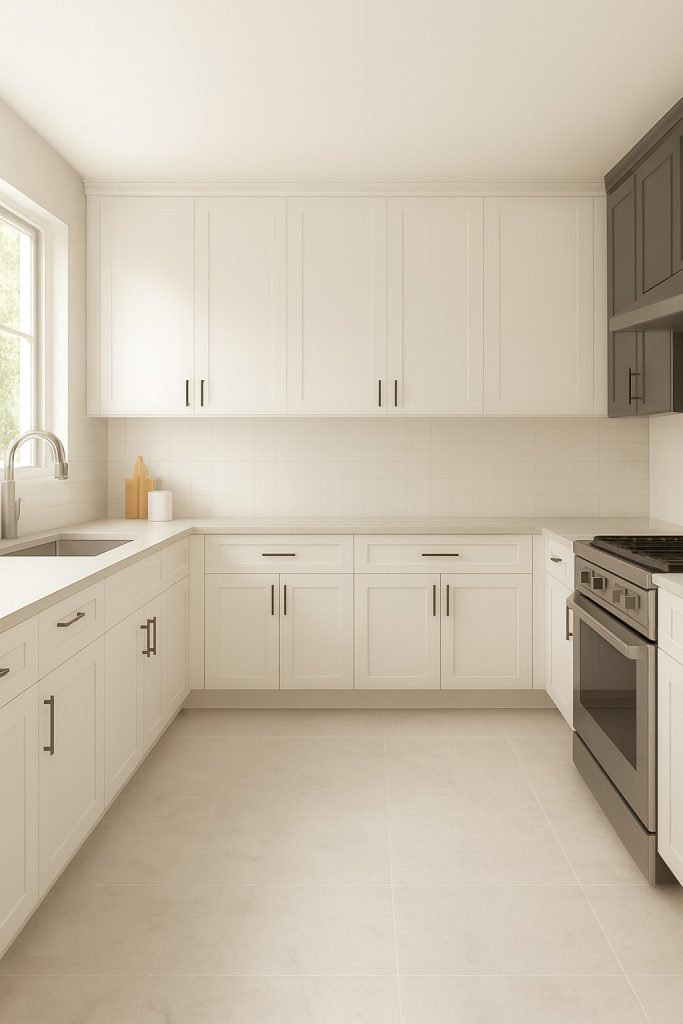
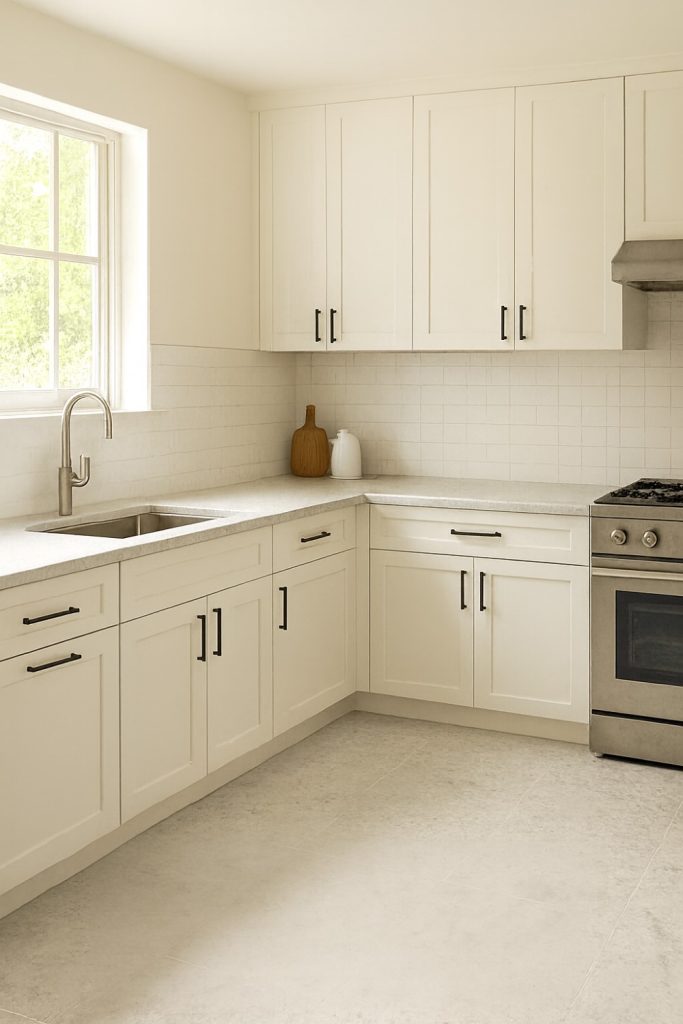
White marble floors in kitchen spaces can be very transformative—in subtle but powerful ways. They instantly make smaller kitchens feel larger by bouncing sunlight around the room, giving even a narrow layout a sense of openness. No wonder many designers often recommend them for kitchens with limited natural light!
Another practical benefit of white marble floors is that spills, drips, and crumbs are easier to spot. That’s a real advantage for families or anyone with a busy kitchen. However, keeping these floors pristine calls for a consistent cleaning routine.
Overall, a light marble floor in the kitchen is perfect if you want a clean, bright, and timeless look. It works exceptionally well in modern, minimal, or coastal-style kitchens.
Dark Marble Kitchen Floors — Bold, Cozy, and High-Contrast
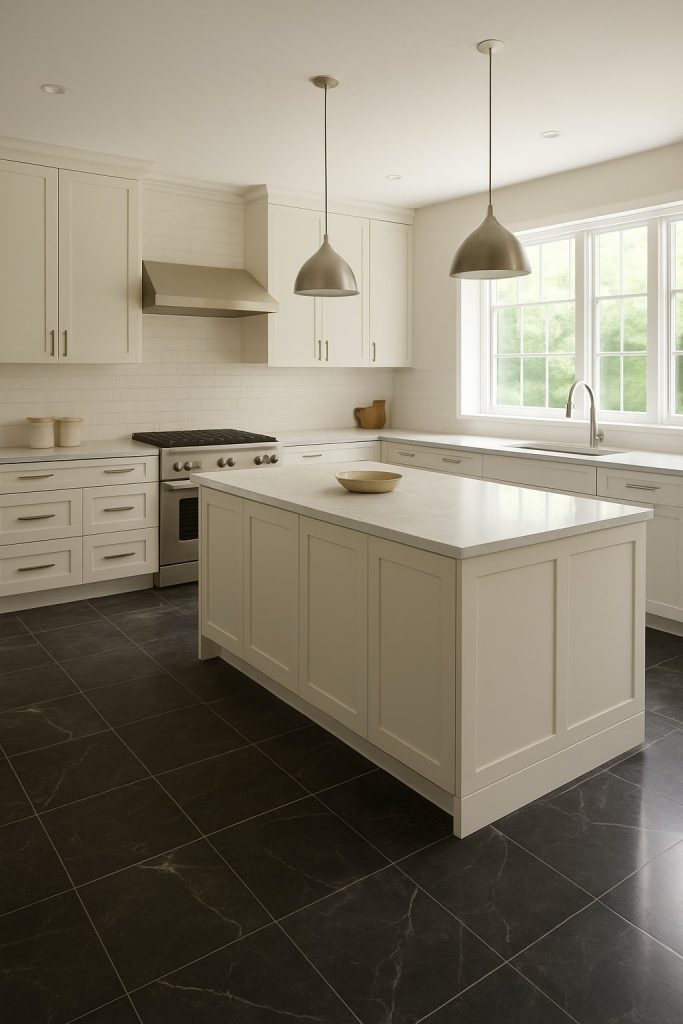
Dark marble floors can give a kitchen a warm, cozy feel that feels a bit more dramatic. Unlike white, dark marble hides dirt and crumbs better. That’s important if your kitchen sees a lot of use. Dark floors also create a strong contrast with white or light cabinets, making colors pop and giving the space a stylish, polished look.
These floors work best in large spaces with plenty of natural light. In smaller kitchens, dark marble can sometimes make the room feel tighter. So, it’s worth thinking about the overall layout before choosing.
In short, a dark marble floor in a kitchen makes a fantastic option for a bold, elegant appearance. Pair it with lighter walls or cabinets, and you’ll balance the depth without making the room feel heavy.
Light vs Dark Marble Flooring in Kitchen: Side-by-Side Comparison
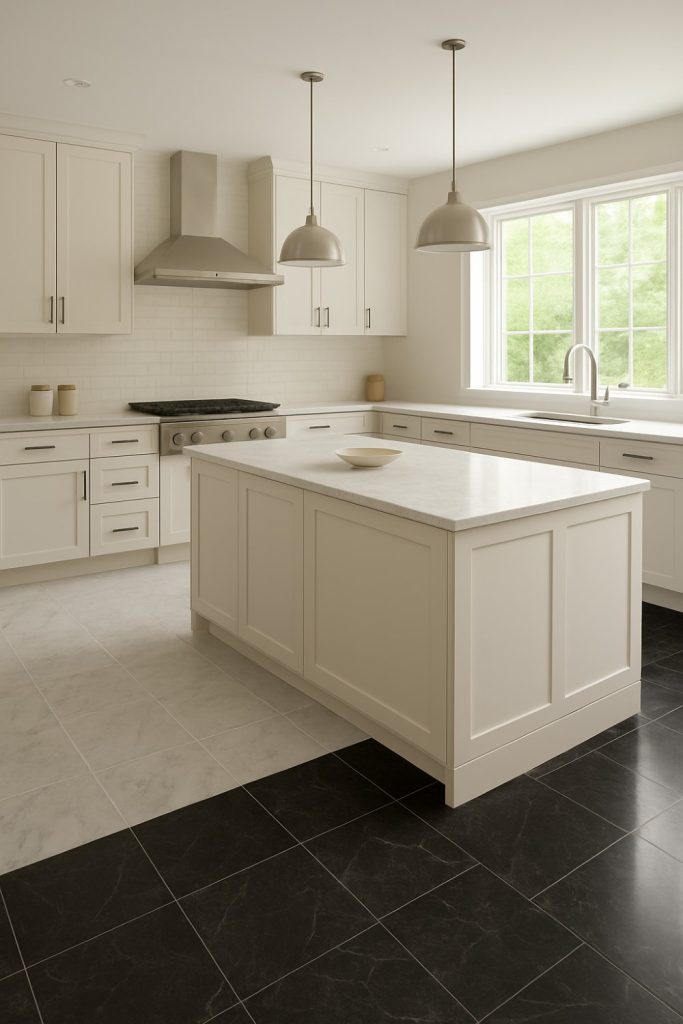
To make it even easier to compare and choose the right marble, we’ve put the key differences side by side. The following table brightness, maintenance, stain visibility, durability, design flexibility, and cost.
It’s a perfect summary for anyone in a hurry who just wants to skim and decide which style fits their kitchen best quickly.
| Feature | Light Marble Floors | Dark Marble Floors |
| Brightness | Reflects sunlight, makes the kitchen feel open and airy | Absorbs light, giving a cozy, dramatic vibe |
| Maintenance Effort | Shows spills and dirt quickly; needs regular cleaning | Hides messes better but dust is more noticeable in bright light |
| Stain Visibility | Spills stand out, making quick clean-ups easier | Spills are less obvious, but still require care to stay fresh |
| Heat and Scratch Resistance | Can scratch or etch if heavy items drops; sealing helps protect | Same as light marble; mats and care protect the surface |
| Design Flexibility | Works with most cabinets and wall colors; timeless look | Creates bold contrasts; perfect for stylish, dramatic kitchens |
| Cost Differences | Similar pricing for most slabs | Darker slabs with unique veining can cost slightly more; installation similar |
Choose the Ideal Marble Floor For Your Kitchen – What Designers Recommend
✔ What’s Your Kitchen Size?
If your kitchen is on the smaller side, light marble is usually the better choice. It reflects light and helps the space feel open and airy. For larger kitchens, dark marble can bring balance. It adds warmth and makes wide-open spaces feel cozier without overwhelming the room.
✔How About Maintenance?
If low maintenance is essential, dark marble with a honed finish is a smart option. As explained, it hides dirt and scratches better than polished light marble, making everyday care easier.
You might find these helpful:
🔗How often to clean floors – discover where most people go wrong ➡
🔗 Marble floor polish – learn how to polish marble safely and what actually works ➡
✔Overall Appearance of Your Room
For those who love a clean, modern look, light marble with subtle veining creates a fresh, timeless vibe that works with most cabinet and wall colors. And if you’re after drama, bold dark marble offers contrast that immediately draws the eye and makes a strong statement.
Whatever style you choose, marble floors in the kitchen should complement your space, lighting, and lifestyle. The right type should make your kitchen feel both beautiful and practical for years to come.
Final Word: Your Kitchen Deserves the Perfect Marble Floor
You’ve explored the differences between light and dark marble. And now you’re in a much stronger position to make the choice that fits your kitchen, style, and lifestyle. Kitchens are the heart of our homes, where we cook, gather, and make memories. It makes sense to give this space a floor that brings it warmth, beauty, and lasting functionality.
We’d love to hear from you:
What type of marble did you choose for your kitchen? Or do you have a tip that other readers could benefit from? Drop your thoughts in the comments below!



Leave a Reply